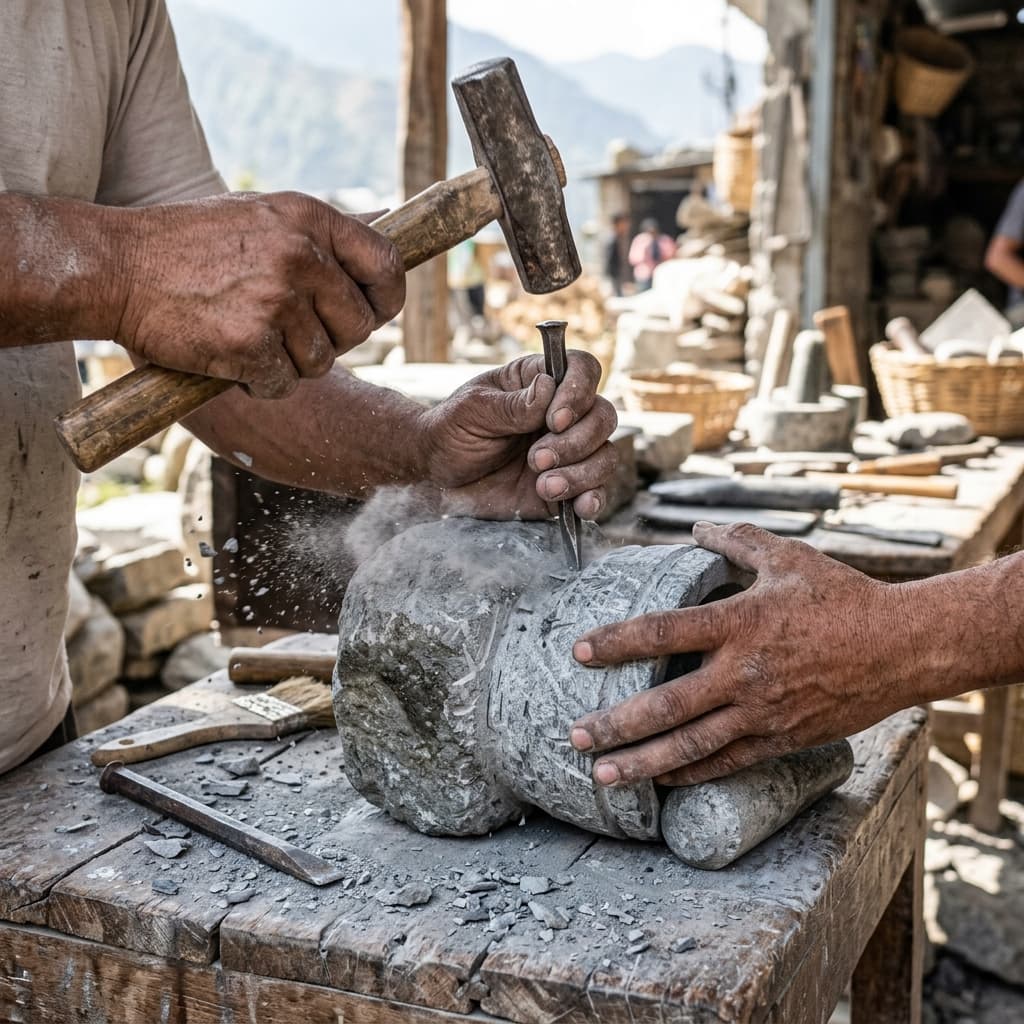
In a world of perfect, machine-made things, there is a quiet rebellion in the handmade. An object that bears the mark of its maker is not flawed; it is alive.
Handmade objects have a way of carrying the presence of the people who made them. That quiet human touch is what continues to draw us toward traditional craft. Good craftsmanship is rarely about perfection. It is about patience, attention, and knowing when to stop. Those small variations are often what make an object feel human.
The Philosophy of Wabi-Sabi
Wabi-sabi is the Japanese art of finding beauty in imperfection and the natural cycle of growth and decay. It is a philosophy that reminds us to appreciate character over perfection. Nature rarely strives for perfect symmetry, yet it rarely feels incomplete.
"An object that breathes reminds us that we, too, are allowed to be imperfect."
Tactile Honesty
When you hold a thoughtfully made object, you notice the small details that machines often smooth away. These are honest objects. They don't pretend to be anything other than what they are. They are made to be used, to be worn, to be loved, and to grow old with you.